


Strangles, an age-old infectious disease mainly affecting equines, represents a major challenge for equine veterinary professionals. This disease, caused by Streptococcus equi subspecies equi, an obligate β-haemolytic, Gram-positive cocci bacterium, is often associated with epidemics in stables and stud farms.
Strangles is an ancient disease that is widespread throughout the world. Regions with a high density of horses, such as Europe, North America and Asia, are particularly affected. Although the disease can occur at any time of year, it is often seen in winter and spring, when horses are confined in enclosed spaces and the stress of environmental changes (travel, equine competitions) can weaken their immune systems.
Strangles mainly affects young horses under 5 years of age, but can occur at any age. In a population of naïve horses, morbidity can be close to 100%, although mortality is generally low, at between 1% and 5%. It takes at least 3 months to eradicate the disease from a group of horses.

Strangles in horses is a highly contagious disease, mainly transmitted by direct contact with infected horses or healthy carriers of Streptococcus equi equi. According to data collected by the French Horse and Riding Institute (IFCE), the rate of strangles transmission can be extremely high, reaching up to 100% in herds of non-immune horses.
Furthermore, strangles can persist in the environment for variable periods, increasing the risk of indirect transmission. According to data collected by the IFCE, Streptococcus equi equi can survive in the environment for several weeks, even several months, in favourable conditions of temperature and humidity.
The spread of the disease can be particularly rapid in stables, riding schools and equine gatherings, where horses are in close contact with each other. A study by veterinary professional epidemiology researchers found that strangles can be transmitted by multiple routes, including nasal spray, respiratory secretions and contaminated surfaces.
It is therefore essential to implement strict prevention and control measures to limit the spread of strangles. This includes isolating infected horses, quarantining new arrivals, regularly cleaning and disinfecting facilities and equipment, and systematically screening horses at risk.

The first symptoms may not appear for 3 to 14 days after infection.

The first symptoms may not appear for 3 to 14 days after infection.

Patients may remain contagious for up to 1 month.

Around 80 to 100%* of horses with strangles have a fever (40°C or more).
*According to a study by the French Horse and Riding Institute (IFCE).

70-100%* have swollen lymph nodes under the jaw, often accompanied by neck stiffness.
These lymph nodes can increase up to three times their normal size in cases of severe infection.

They may also present respiratory symptoms. These may include a dry, persistent cough,
purulent nasal discharge and breathing difficulties, especially during physical exertion.

In severe forms of the disease, other complications can arise, such as multiple abscesses in different parts of the body, gastrointestinal disorders and neurological damage. These complications can worsen the horse's general condition and require urgent medical intervention.
Diagnosing strangles in horses has long been a challenge for veterinary professionals due to the variety of clinical symptoms and the limitations of traditional methods. However, with advances in technology, new, faster and more accurate diagnostic solutions have emerged, providing practitioners with effective tools to rapidly detect infection and take appropriate action.
Traditional methods of diagnosing strangles, such as bacterial culture and serology, have certain limitations.
Bacterial culture, although considered the reference method for diagnosing strangles, can take several days to produce results and may lack sensitivity in some cases.
Although serology can detect the presence of antibodies against Streptococcus equi equi, it is not always possible to differentiate between an active and a past infection.
An alternative to these two methods is molecular diagnosis. Diagnosis by PCR or LAMP enables Streptococcus equi DNA to be detected with high sensitivity and specificity, providing an accurate diagnosis in just a few hours.
Some studies have shown that PCR can detect the presence of the pathogen in nasopharyngeal samples with a sensitivity of more than 95%.
These challenges have made it imperative to find innovative and effective diagnostic solutions to combat strangles in horses.

As a specialist veterinary diagnostics company, our rapid molecular diagnostic solution using LAMP (Loop-Mediated Isothermal Amplification) offers many benefits to equine veterinarians. This isothermal DNA amplification method allows rapid and accurate detection of Streptococcus equi subsp. equi DNA in less than an hour.
What's more, our solution is easy to use in the field, using samples taken from nasopharyngeal swabs or guttural pouch washes, making it a versatile method and adaptable to different clinical situations. It offers veterinary professionals a new approach to diagnosing and managing strangles in equines. The benefits for day-to-day practice in equine internal medicine include improved diagnostic responsiveness, reduced treatment times and improved management of epizootics in stables and stud farms.
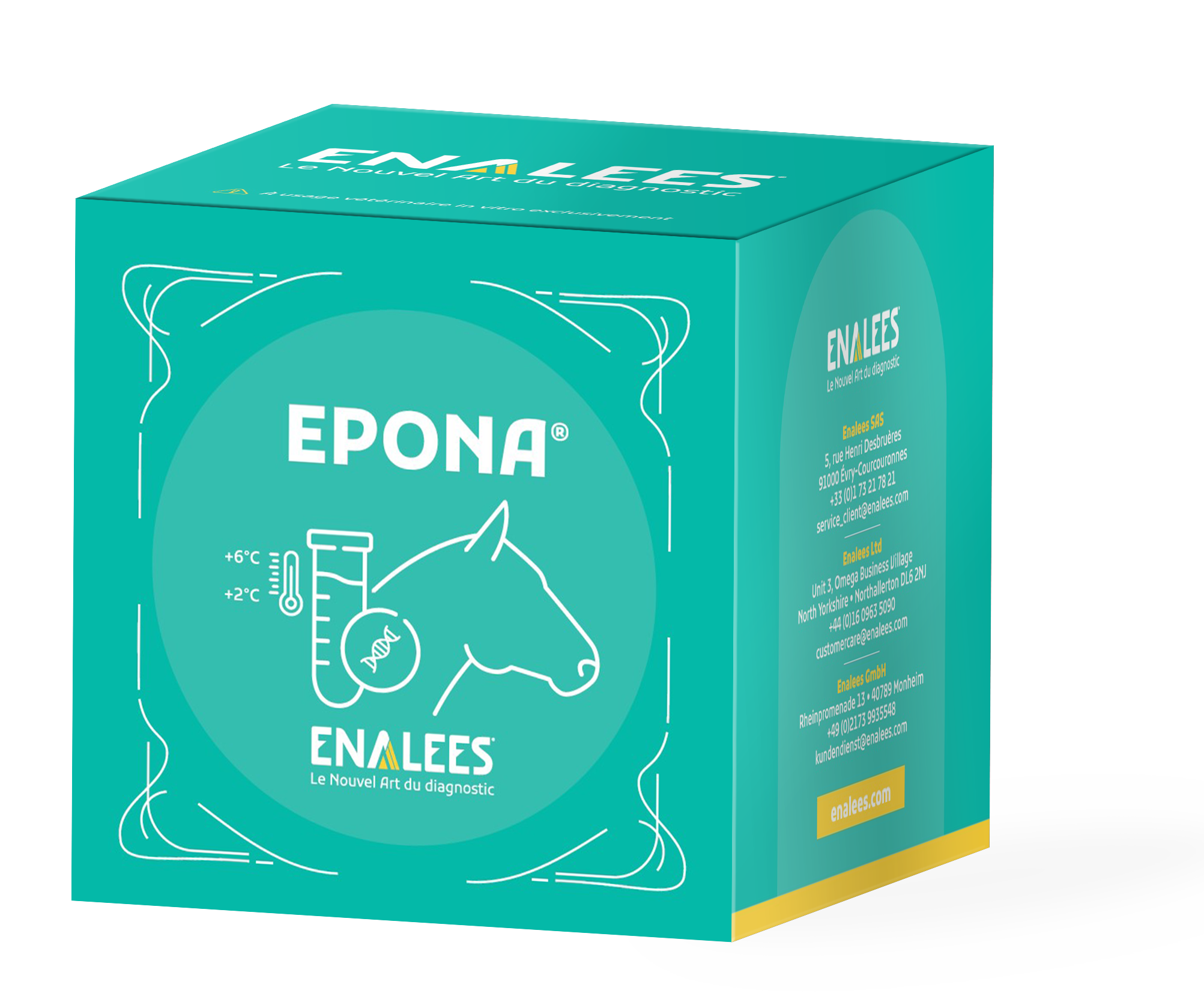 See the Epona Strangles test
Strangles remains a major challenge for equine veterinary professionals, but advances in the diagnosis and management of the disease are opening up new opportunities. By combining an in-depth understanding of the disease with innovative diagnostic technologies such as LAMP, equine veterinary professionals can improve the health and welfare of horses, while contributing to the prevention and control of epizootics.
Download the newsletter
CANINE TICK DISEASES EHRLICHIOSIS: THE DIAGNOSIS OFTEN FORGOTTENCANINE TICK DISEASEMany pathogens are the cause of tick-borne diseases in dogs, such as Babesia canis, Babesia gibsoni, Anaplasma platy...

BEVA • 12-14 September 2024 • Liverpool • Stand E20« A congress Run By Vets For Vets »The BEVA Congress is more than just aconference. It is a dynamic place where ...

Bovine Respiratory Syncytial Virus (BRSV) is a single-stranded virus belonging to the Pneumoviridae family1,2. It was renamed Bovine orthopneumovirus in 2016 and Orthopneumovirus bovis in 20221. It is...

MANAGEMENT OF ANIMAL WELFARE AND APPROPRIATE TREATMENT AT Oniris...

Feline CoronavirusFeline coronaviruses (FCoV) are frequent in feline populations, particularly in community settings. Although the majority of infections are benign, around 5% of infected cats develop...